Why does my page rank on Google but not show in AI answers?
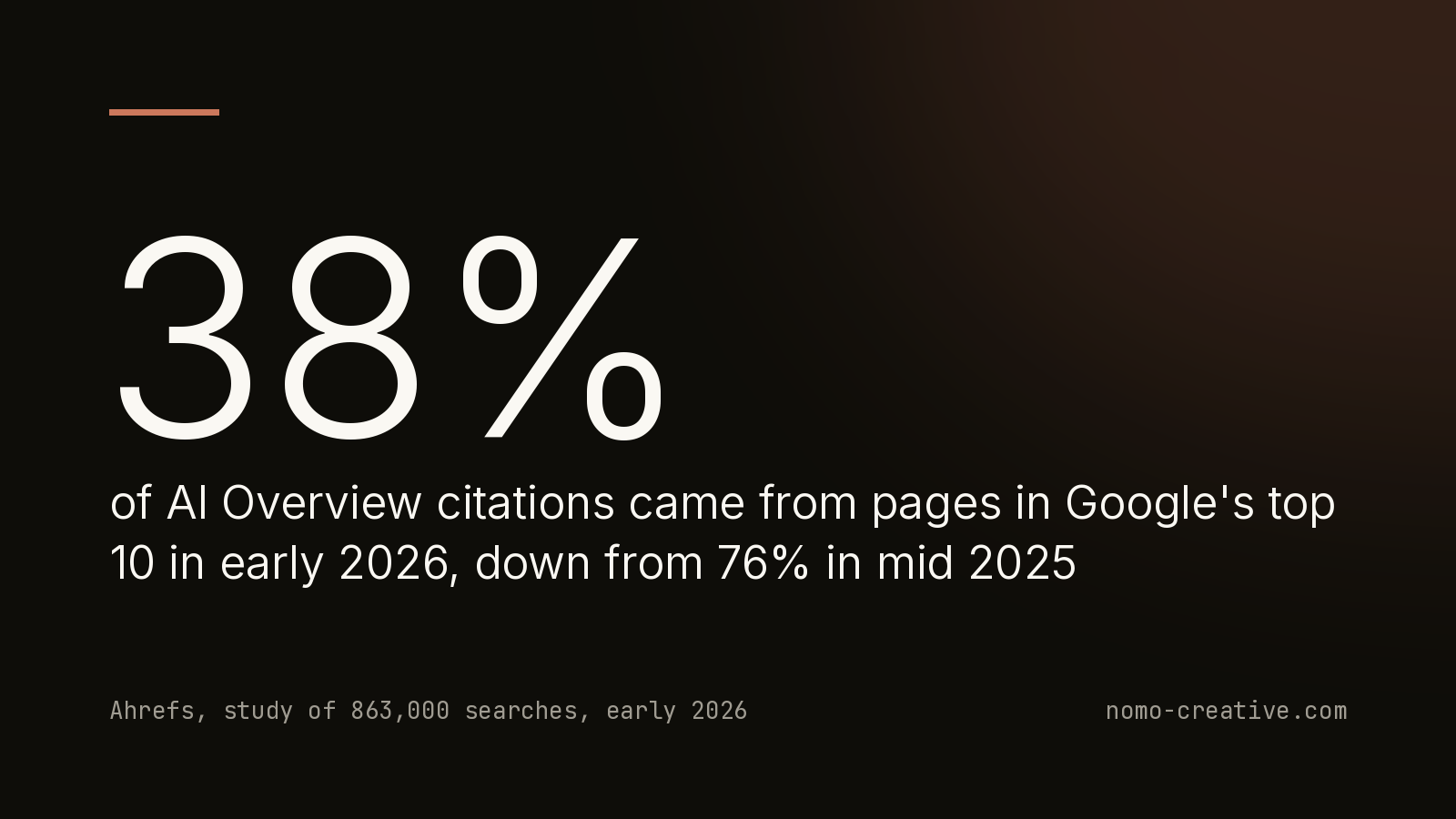
Your page can rank on Google but not show in AI answers because ranking and citation are now two different systems. An Ahrefs study of 863,000+ searches found only 38% of AI Overview citations also rank in Google’s top 10, down from 76% seven months earlier. The AI picks passages it can quote, not pages it ranks.
For years there was one scoreboard. You ranked high, you got the clicks and when AI Overviews arrived they mostly cited the same top-ranking pages. That overlap is breaking. The remaining citations now split almost evenly between pages ranking 11 to 100 (about 31%) and pages that do not appear in Google’s top 100 at all (about 31%). A separate BrightEdge analysis put the top-10 overlap even lower, near 17%. The exact number is contested. The direction is not.
What does the AI actually use to decide who gets cited?
The AI uses a clean, quotable passage, not your ranking position. It looks for a sentence that states plainly who you are, what you do and who you serve, then lifts it into the answer. Ranking helps your page get found and indexed, but passage structure and consistent wording are what decide whether you get quoted.
Think of it as the difference between being in the library and being the sentence the librarian reads aloud. Most business sites make this hard on purpose without realizing it. The company name lives in a logo image. The service is wrapped in a slogan. The location is in the footer. A human reader stitches that together fine. A model scanning for a clean, liftable line skips you and quotes the competitor who simply wrote, “We are a real estate brokerage in Dubai Marina helping buyers find apartments.”
How do I get my business cited in AI answers?
To get your business cited in AI answers, write the plain-language passage the AI needs and keep it consistent everywhere. State your name, your category and the area or audience you serve in one clear place. Answer the exact questions buyers ask. Then make sure the same description repeats across your site, profiles and directory listings, so the model sees one consistent story.
A practical order of operations:
- Confirm the AI crawlers can even read your site. If they’re blocked, nothing else matters. We covered that check in the AI crawler post.
- On your key pages, put a direct, quotable line near the top: who you are, what you do, who you serve.
- Build pages that answer real buyer questions in their words, with the answer first.
- Keep your name, category and location identical across your website, Google Business Profile and any directory that lists you.
- Re-test by asking the AI a buyer question and checking whether you’re named.
Notice what is not on the list: “rank higher.” Ranking still helps, but it is no longer the lever it was. Being easy to quote is.
Should I stop doing SEO, then?
No. SEO still earns the indexing and authority that make you eligible to be cited and Google search still sends real traffic. The shift is that good rankings no longer guarantee a place in the AI answer. Getting named in AI answers sits next to SEO, not in place of it. The mistake is checking your rank, seeing #1 and assuming the AI sees you too.
The honest limit here: nobody can promise you a fixed spot in an AI answer. These answers shift week to week and the systems behind them are not fully transparent. The work improves how often you get named. It does not guarantee it. What it does reliably is stop you going unnamed for reasons you could fix in an afternoon.